3G Lighting rep — Ottawa and Eastern Ontario
3G Lighting — Architectural Downlights and Cylinders
The ceiling is the architecture. The fixture has to disappear into it.
Talk to us about a ceilingWhat it does for a ceiling
3G is a family-owned architectural lighting manufacturer built in Woodbridge, Ontario. We specify it on projects where the ceiling is doing architectural work and the light needs to become part of it.
The thing that shapes every other decision on this line: the LED source sits regressed inside the housing, and 95+ CRI is the standard — not the upcharge — on the downlights, the Madison gimbals, the curved G-RO channel and the acoustic pendants. Regress is why the fixture disappears. Ninety-five CRI is why faces read. (The linear and ZOIE families run 80+ standard with 90+ optional, so we specify to the family, not to a brochure line.) Those two sentences are most of what we use this line to do.
We specify it right across Ottawa — from a national law firm to a two-thousand-capacity music venue.
What we use it for
Ceiling integration
Coffers, waffles, folded canopies and slatted rafts — apertures chosen to suit the ceiling that is already drawn.
Glare control by regress
A deep-regressed source, so the light lands on the surfaces and the aperture stays quiet.
Colour rendering
95+ CRI where faces matter — venues, reception, boardrooms, food halls.
Consistency at volume
Three hundred units that have to look like one decision from the floor.
 See the Kinaxis Headquarters project
Kinaxis Headquarters, Kanata
Fitting the fixture to the ceiling, not the ceiling to the fixture
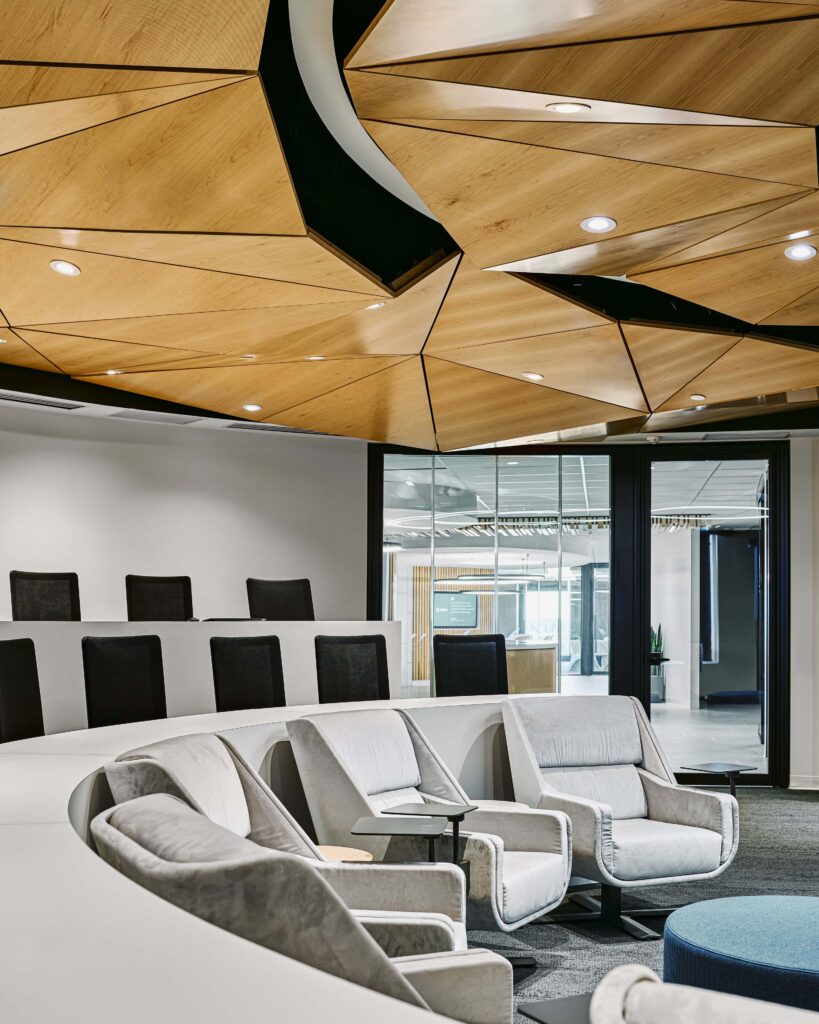
The town hall ceiling at Kinaxis is a folded timber origami — facets meeting at angles no standard aperture wants to sit in. The downlights are set into the facets themselves, so the ceiling reads as one sculpture rather than a surface with holes in it. That is the decision the whole line exists to serve. It works because the fixture can arrive in the size, trim and finish the ceiling already implies, rather than the ceiling bending around a standard aperture.
 See the Canadian Internet Registration Authority project
Canadian Internet Registration Authority, Ottawa
Regress is what makes a downlight disappear
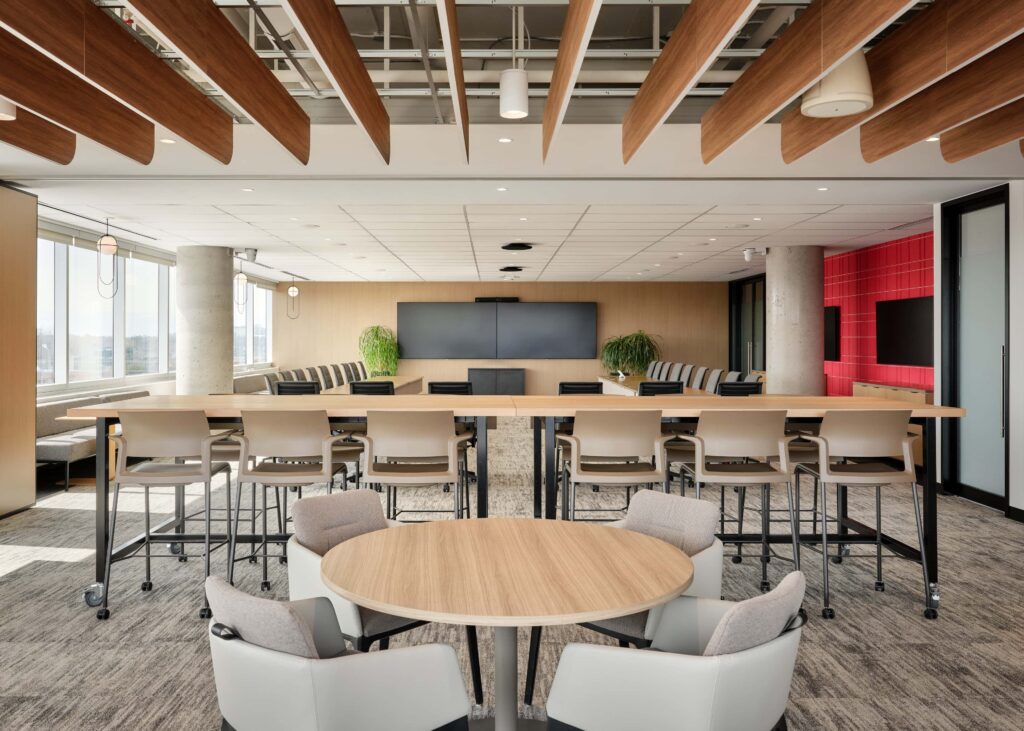
At CIRA there are thirty-three deep-regress downlights under walnut fins and a slatted raft. Pulling the source up inside the housing is what stops a ceiling reading as a grid of bright dots. You see the light on the walnut and on the desks; you do not see the aperture. Deep regress is not a finish option, it is the difference between a ceiling that looks designed and one that looks serviced.
 See the HISTORY Ottawa project
HISTORY Ottawa, Ottawa
Ninety-five CRI is why faces read
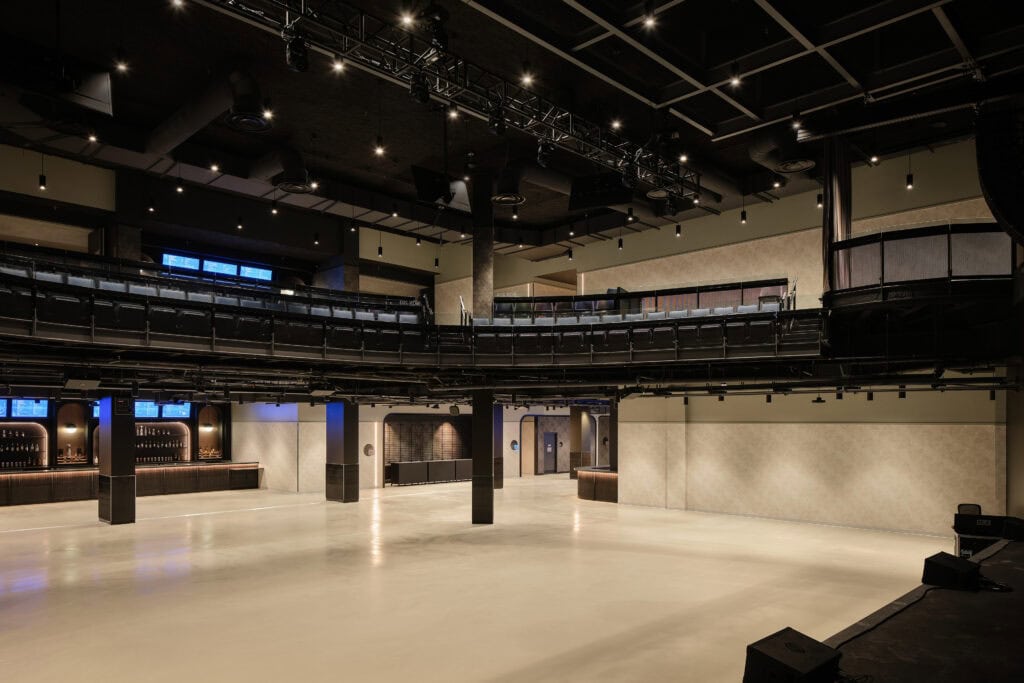
More than three hundred downlights and surface cylinders went into HISTORY, black, at 3000K and 95 CRI — so faces read properly under them. In a venue, that is not a nicety: it is whether the room photographs, whether skin tones look alive from the floor, and whether the bar looks like somewhere you want to stand. Over the reserved tier the same family arrives as pendant cylinders, so the language does not change when the ceiling does.
 See the Smart & Biggar Montréal project
Smart & Biggar Montréal, Montréal
The same fixture, three hundred times, the same
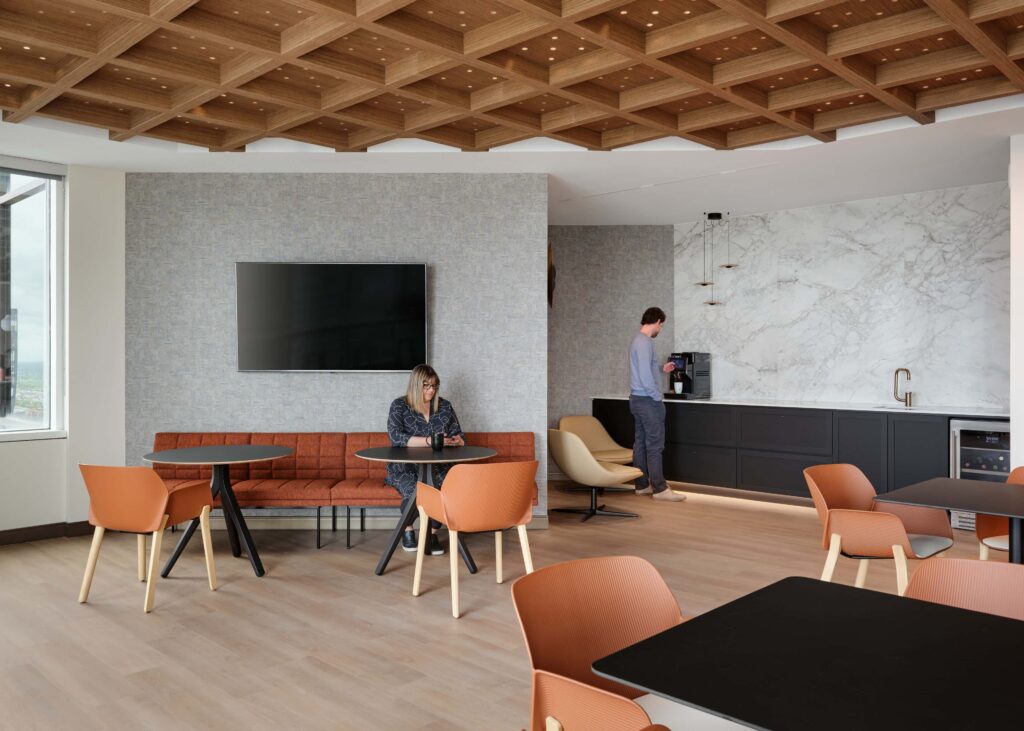
A timber waffle ceiling takes one recessed downlight per coffer, and every one of them is visible from the floor at once. Consistency stops being a quality metric and becomes a visual one — a single unit sitting proud, or a half-degree of tilt, or one aperture a shade warmer than its neighbours, and the ceiling is wrong in a way nobody can name but everybody sees. Volume is where a fixture line is actually tested.
The half of the job nobody photographs
At Teraanga Commons the 3G layer was specified to be invisible, and disappearing on purpose is the more difficult assignment of the two. A feature pendant draws the eye; the layer around it has to stay quiet, and that is the harder brief. Making four hundred square metres of downlighting sit quietly under a designed ceiling, at the right colour, without a single glaring aperture, is the part that takes a specification rather than a catalogue.
It is also the part that gets value-engineered first, because on a drawing it looks like a commodity. It is worth protecting: swap a regressed source for a flush one and the ceiling you spent the budget on becomes a grid of bright dots.
Procurement, and what Canadian manufacture actually gets you
3G manufactures in Woodbridge, Ontario. On an Ontario public-sector project that is no longer only a sentiment: since April 2026 the Buy Ontario Procurement Directive has asked bidders on capital-infrastructure work to file a Domestic Supply Chain Plan naming the source of each major good, and lighting sits inside the definition. When a public bid asks where each major good comes from, we confirm the origin of the specific SKUs on your schedule rather than answering for the brand.
| Approvals | ETL, to UL 1598 |
|---|---|
| Canadian standard | CSA C22.2 No. 250.0 |
| Warranty | Five years on LED and drivers; one year on materials and workmanship. Terms vary by family — the acoustic baffle is one year throughout. Check the sheet for your SKU. |
| Manufacture | Woodbridge, Ontario |
| 3GQ QuickShip | Ten days or less on a named SKU list — downlights, cylinders, LINIA and two Madison codes. 3G is explicit that this is a ship-time commitment, not a delivery-time commitment. We confirm the current list and the freight terms with the factory before anyone plans a date around it. |
Approvals, warranty and CRI are as published on 3G’s current specification sheets, which are revised often — we quote against the sheet for your SKU, not a family-level summary. We do not quote a lead time from a catalogue — we confirm it against the factory for your SKUs.
See the range
Browse the 3G Lighting products published to our line card. Manufacturers maintain their own listings — if you can’t find what the drawing calls for, ask us.
Browse 3G Lighting on the line cardTwo things worth knowing about before you draw
Two things in this line change what is possible on a drawing, and both are worth knowing about before the ceiling is fixed.
The curved channel. A recessed slot that follows a twelve-inch radius, at 95+ CRI, with adjustable gimbals inside the channel and a trimless mud-in or flangeless-into-wood edge. Send the factory a sketch, a PDF or a DWG and they return a validated layout — part numbers, head counts, sectioning, circuit guidance. For an atrium, a library, a student commons or any curved lobby soffit, that is the difference between a lighting idea surviving value engineering and being straightened out of the drawing.
The multi-service channel. One coordinated slot that carries the diffusers, sprinklers, strobes, detectors, speakers and access points along with the light, instead of six trades negotiating the same ceiling. It is the sort of thing that settles a coordination meeting rather than extending one.
Both are made in Woodbridge, which helps when the layout changes at shop drawings and the answer has to come back quickly.
The range, and what each family is for
3G’s published families as they stand today. Tell us the ceiling and the condition you are solving, and we will send the current factory sheet for the family that fits — not a summary.
| G-RO | Curved recessed slot and curved linear, in standardized radii from twelve to sixty inches with thirty, forty-five, sixty and ninety degree segments. Trimmed, trimless mud-in, or flangeless into wood. This is the one most specifiers do not know exists. |
|---|---|
| 3Gi | An integrated channel that carries the other trades in the same slot — diffusers, sprinklers, strobes, detectors, speakers, cameras, access points — alongside the light. Published UGR under 16, and under 10 on ZOIE. |
| ZOIE | The deep-regress, low-glare series. Downlights, cylinders, wall and linear. |
| ACOUSTIC | Felt pendants with the luminaire built in, or as a bare baffle. NRC up to 0.9, half-inch felt largely from recycled bottles, twenty body colours, Class A flame spread. |
| Downlights | Two, three and four inch, round and square, fixed, adjustable or wall-wash — and dual and triple aperture out of a single housing. |
| Specialty Ceilings | A defined set of SKUs engineered to land in manufactured ceiling systems — tegular panel, linear plank and wood, Armstrong and 9Wood named in the sheet. |
| Madison | Dual-axis adjustable gimbals from a 1.2 inch aperture up, one to four heads, and a variant that aims independently from a single datum. |
| Cylinders | Pendant, surface and wall, adjustable through ninety degrees and rotating fully. Direct, indirect or both. |
| LINIA | Linear at 1.5, 2 and 3.5 inch, continuous runs in one-inch increments, and a wall-to-ceiling version that turns the corner without a break. |
| Perimeter | Grazer | Recessed perimeter linear in straight, L and U runs with a cuttable illuminated end filler, plus an adjustable-profile wall grazer. |
| KUBO · RUBO | Square and linear four to twenty-four inch, including the two-by-two recessed; RUBO adds a sandblasted acrylic diffuser. |
Where we’ve used it
Some of the Ottawa-area projects we have photographed, from a national law firm to a two-thousand-capacity music venue.
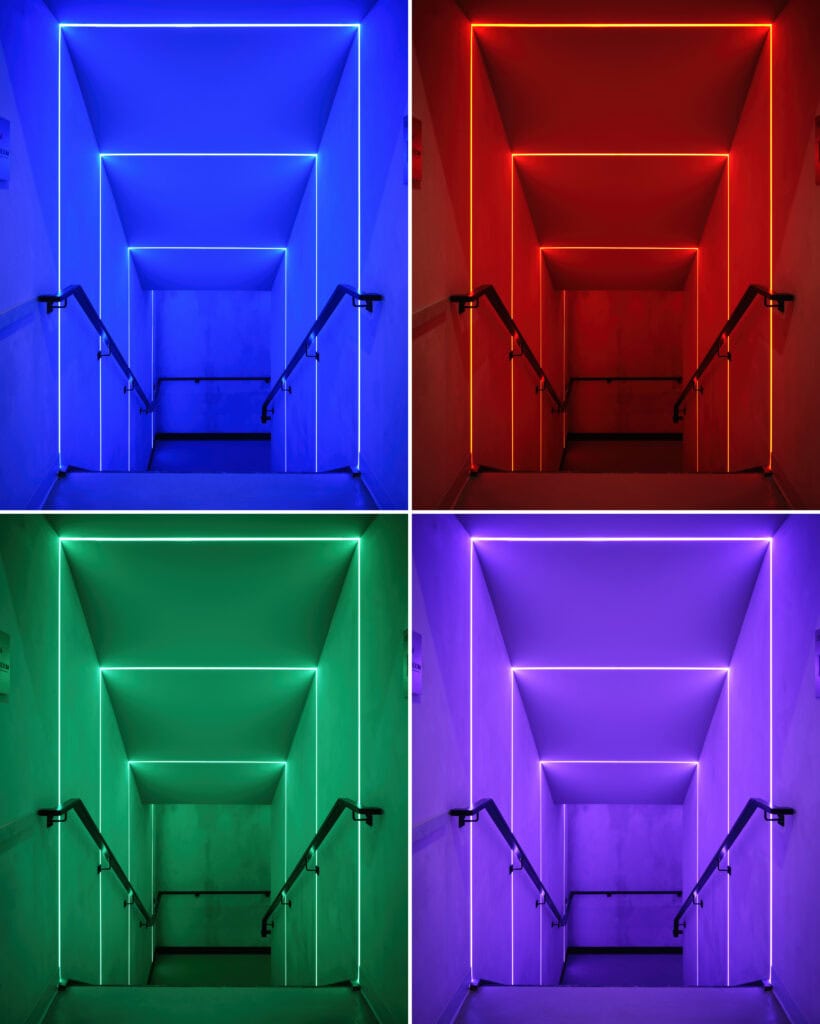
HISTORY Ottawa
Ottawa — More than three hundred downlights and surface cylinders in black at 3000K and 95 CRI, with pendant cylinders over the reserved tier.
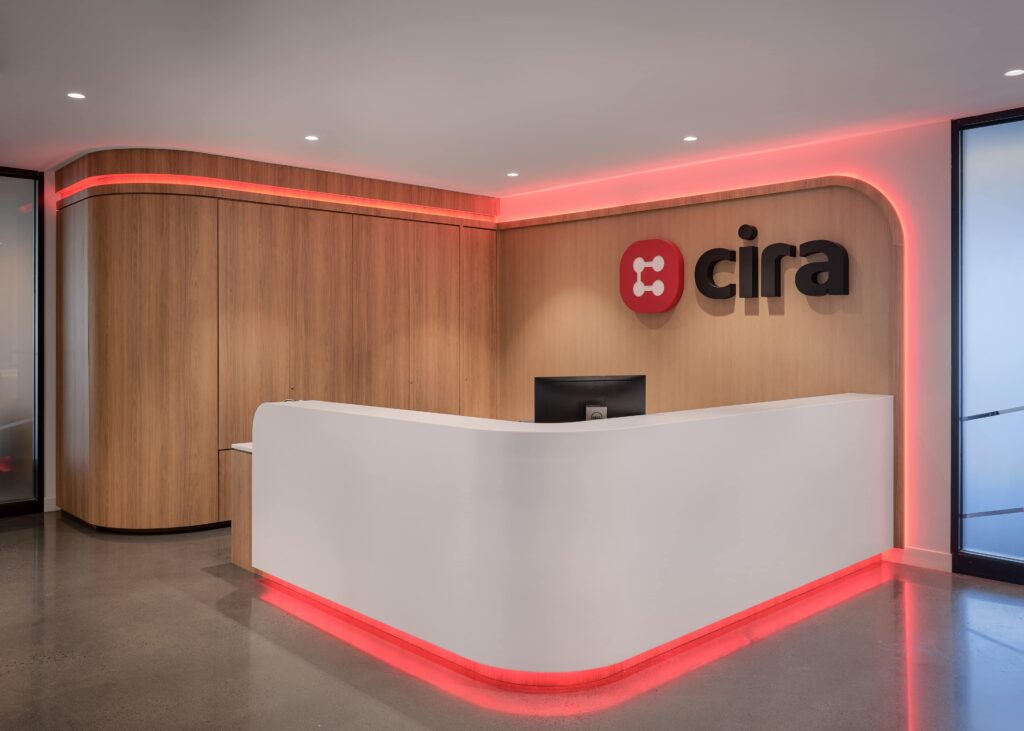
Canadian Internet Registration Authority
Ottawa — Thirty-three deep-regress downlights and six suspended, under walnut fins and a slatted raft.
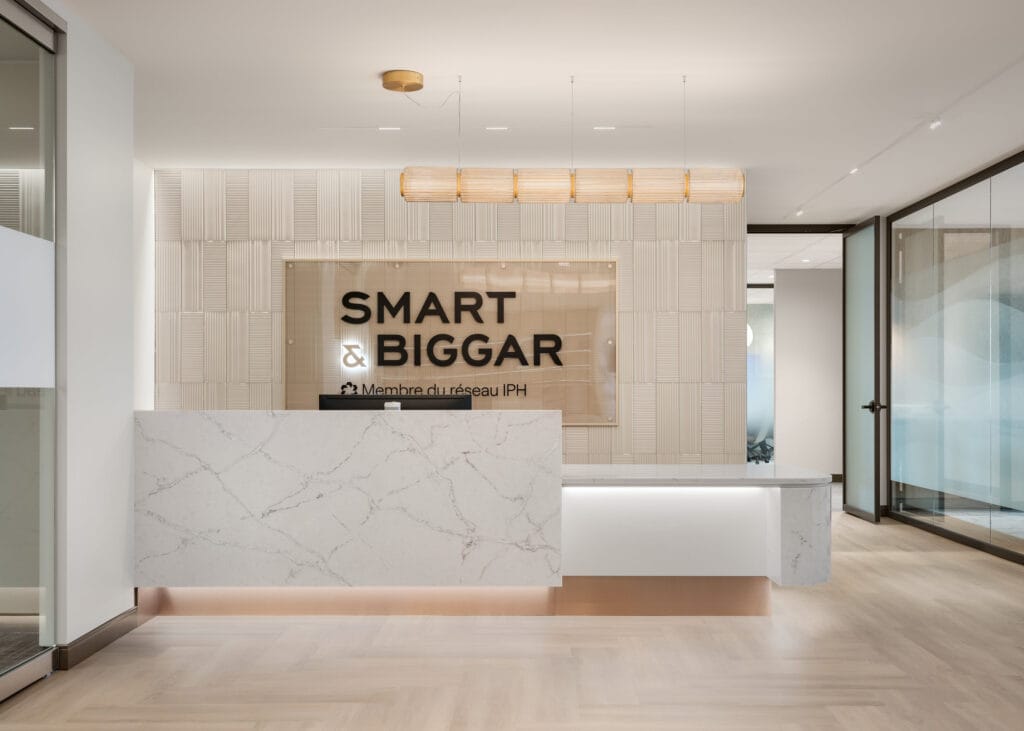
Smart & Biggar Montréal
Montréal — One recessed downlight in each coffer of a timber waffle ceiling, part of the millwork rather than punched through it.
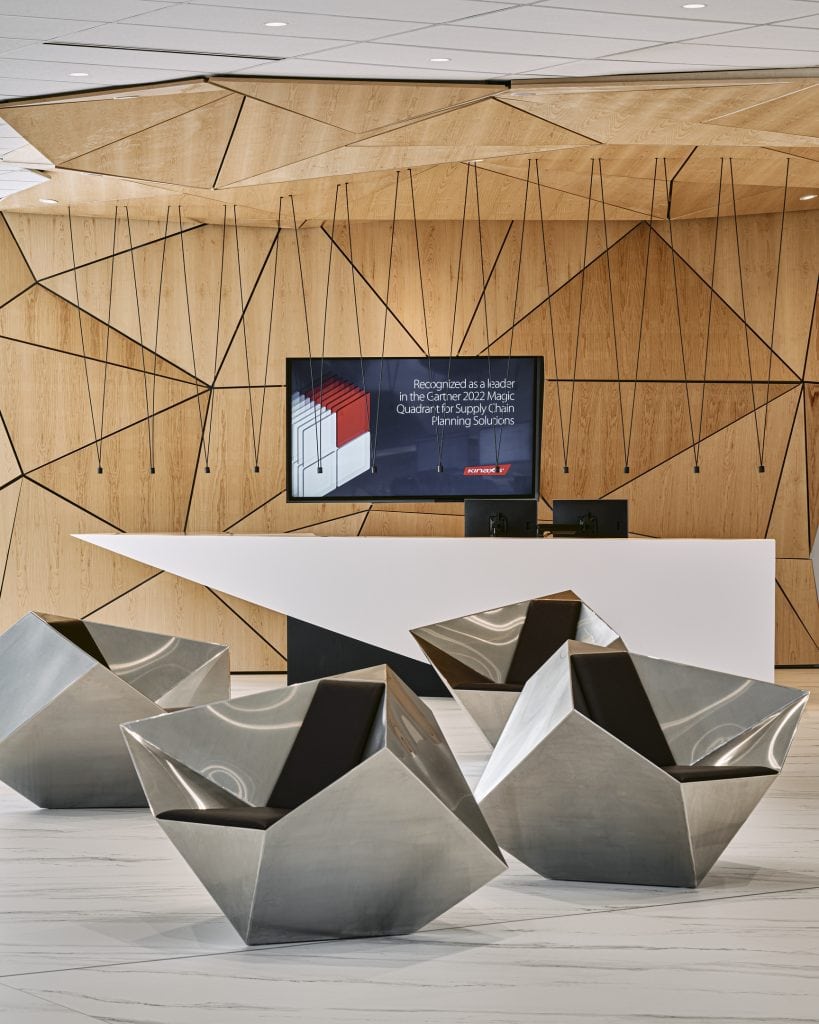
Kinaxis Headquarters
Kanata — Downlights set into the facets of a folded timber canopy, so the ceiling reads as one sculpture.
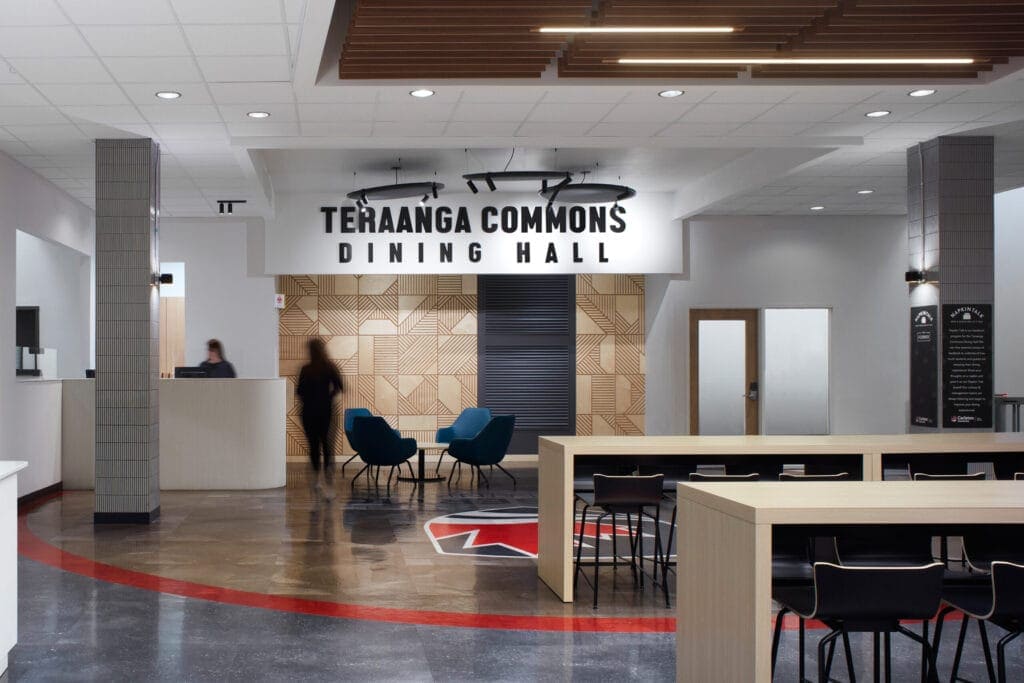
Carleton University Teraanga Commons
Ottawa — Downlights through a food hall, specified to sit quietly under the ceiling.
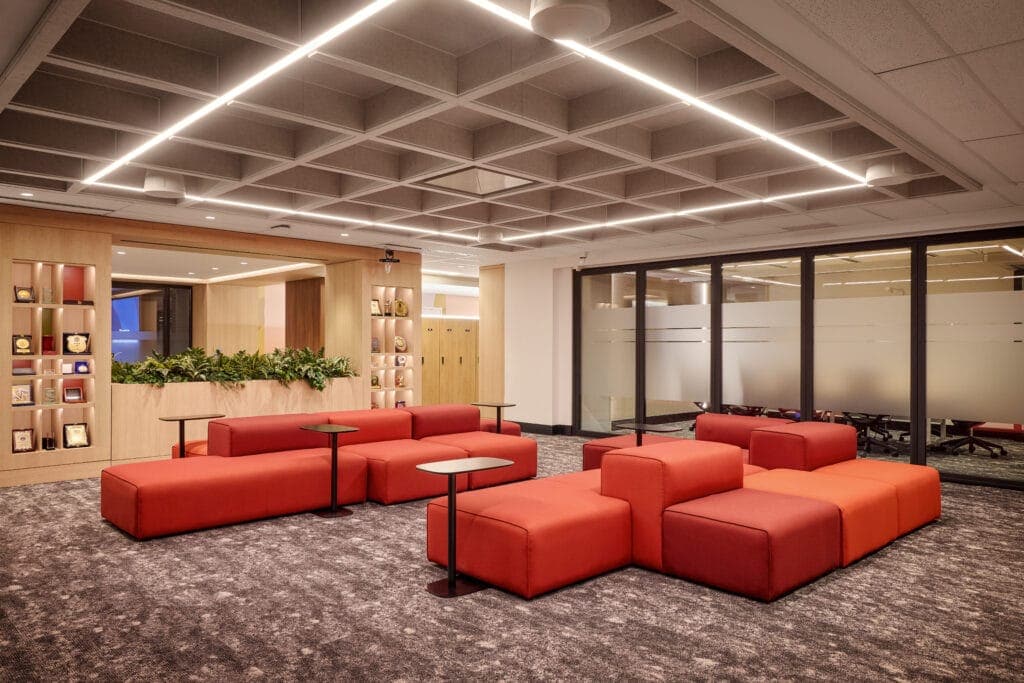
Canadian Commercial Corporation
Ottawa — Downlights through the private offices and the CEO office.
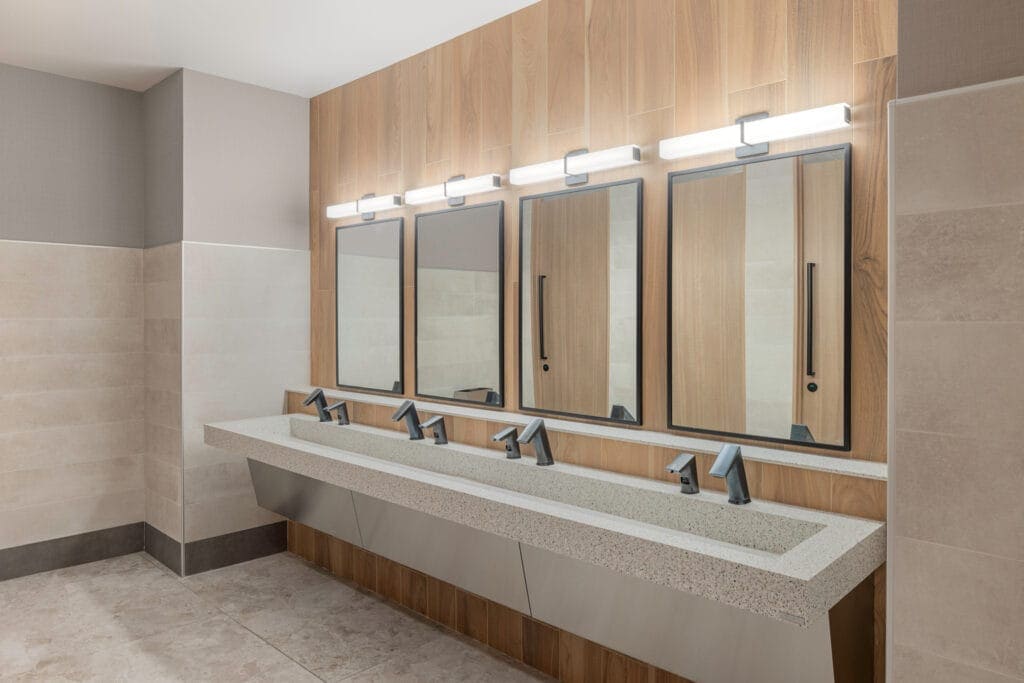
Ottawa City Hall Gender-Neutral Washrooms
Ottawa — Washroom lighting on a civic retrofit where the finish had to survive daily public use.
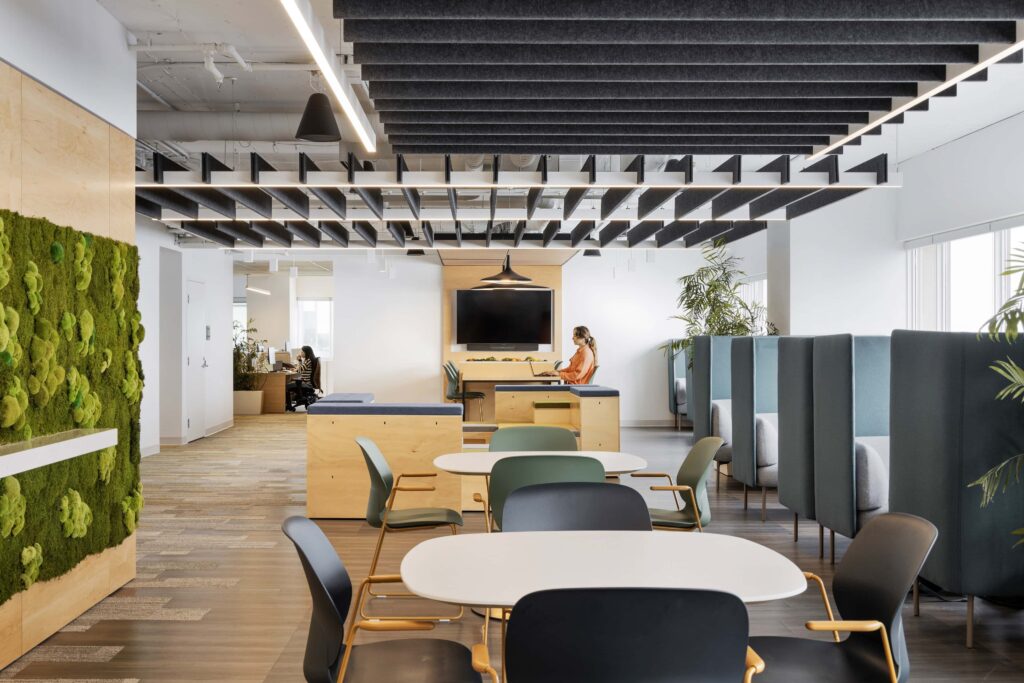
Federation of Canadian Municipalities
Ottawa — Downlights for the café and conference rooms, round ones through the corridors.

Carleton University MacOdrum Library
Ottawa — Two-by-two KUBO troffers with a drop lens, to put some dimension back into a flat ceiling.
Good to know before you specify
Warm-dim, tunable white and RGBW are available in this line. We confirm the current sheet with the factory before they go on a schedule.
We confirm ceiling type, slope and location while the reflected ceiling plan is still open, so the schedule that reaches shop drawings is the one that gets built.
Common questions
Who represents 3G Lighting in Ottawa?
Flux Lighting is the 3G Lighting rep for Ottawa and Eastern Ontario.
Can I specify 3G Lighting through Flux Lighting?
Yes. The architectural downlights and cylinders on this page are specified through us. Tell us what the ceiling has to do and we will build the schedule against it.
Send the ceiling plan while it’s still a sketch
Aperture, regress and trim are cheap decisions on a drawing and expensive ones once the ceiling is coordinated and the millwork is shopped.
Get in touchRelated: All the lines we represent · 3G on our line card · Our services · Office lighting projects